Inside Los Angeles: A 39-Day World Cup 2026 Playbook
The 2026 FIFA World Cup is the largest in history: 48 teams, 104 matches and 16 host cities across the United States, Canada and Mexico, running from June 11 to July 19, Football Compass tracked it as...
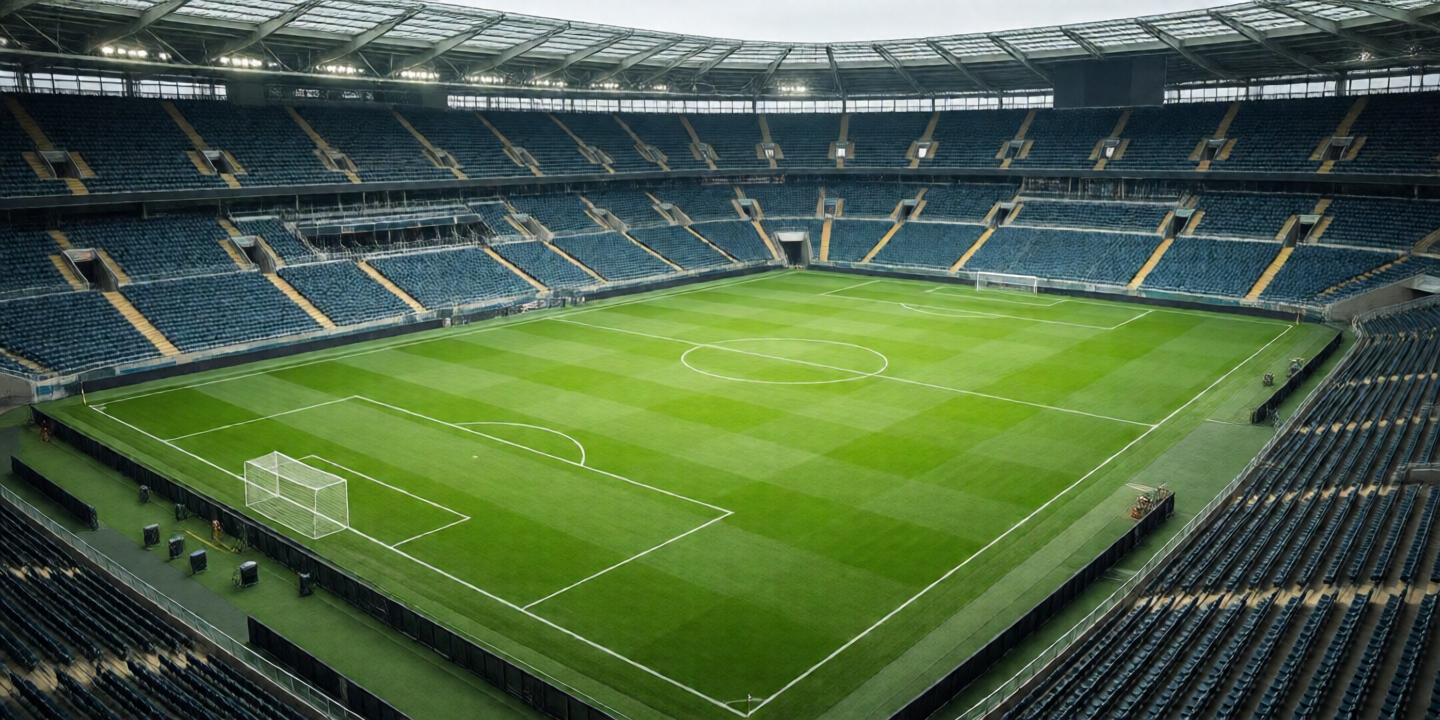
Inside Los Angeles: A 39-Day World Cup 2026 Playbook
The 2026 FIFA World Cup is the largest in history: 48 teams, 104 matches and 16 host cities across the United States, Canada and Mexico, running from June 11 to July 19, 2026. Football Compass tracked it as a bigger and looser tournament than any before it, because the new format sends 32 teams, including the eight best third-placed sides, into a Round of 32. Los Angeles hosted eight matches at SoFi Stadium plus 39 days of fan celebrations at the LA Memorial Coliseum. For fans and bettors, the practical shift is that group-stage losses are survivable, since two out of three third-placed teams advance, while finalists now play eight matches instead of seven. Takeaway: when you review any 2026 match, price the format and not just the teams, and never stake more than you can comfortably afford to lose.
I have lost enough money on football to know that a tournament's rules matter more than its headlines. Have you ever wondered why the same favourite can look like a lock in 2022 and a trap in 2026? Stick with me, because the answer sits in a table most previews skip, and one Los Angeles detail near the end changed how I think about the whole month.
Want the full tournament picture before we dig in? Here is where to start.

Is the 2026 World Cup really the biggest ever?
Yes. According to the Wikipedia entry on the FIFA World Cup, the 2026 edition expands from 32 to 48 teams and from 64 to 104 matches, hosted jointly by the United States, Canada and Mexico. It is the first World Cup with three hosts and the first with a Round of 32.
Here is the part that cost me real money the first time I priced it. The 48 teams are split into 12 groups of four, which produces 72 group matches. The top two in each group go through, and so do the eight best third-placed teams, so 32 sides reach a brand-new Round of 32. Do the division: eight of twelve third-placed teams survive, about 67 percent. Why does that matter? Because a team that loses its opener and then draws twice is no longer an obvious casualty. In the old 32-team format half the field went home after the groups; now only a third does, 16 of 48. Most previews I read still treat matchday one as a must-win, and in my experience that overprices the favourites early. The real pressure arrives in the final round, when points, goal difference and goals scored decide the third-place table across all twelve groups. The scale is physical too. Sixteen host cities, 11 in the United States, three in Mexico and two in Canada, mean a finalist can play eight matches instead of seven. Do I really price tiredness into a Round of 32 line? Believe it or not, I do.
The numbers worth memorising:
- 48 teams in 12 groups of four, giving 72 group matches.
- 32 knockout matches: 16 in the Round of 32, then 8, 4, 2, the third-place match and the final.
- 104 matches in total, against 64 at Qatar 2022.
- 24 group winners and runners-up qualify automatically, plus the eight best third-placed teams.
For a deeper look at how teams were drawn into those groups, see our World Cup 2026 group-stage breakdown.
Curious how a host city turns this machine into a month-long event? Take a look at what Los Angeles did.
How does Los Angeles handle a 39-day football festival?
Los Angeles hosted eight matches at SoFi Stadium in Inglewood, ran the FIFA Fan Festival at the LA Memorial Coliseum in Exposition Park, and added official fan zones across the region. Together they covered the full 39-day tournament window, from June 11 to July 19, not just the match days.
The city's own host site, FIFA World Cup 26 Los Angeles, sells it in three short lines: "Eight matches. 39 days of fan celebrations. One unforgettable summer in Los Angeles." Read that again and ask yourself a question: if only eight of those 39 days had a match at SoFi Stadium, what filled the other 31? The festival did, and that is the whole point. Hosts do not earn from ninety minutes; they earn from dwell time, from the food, the music and the crowd around a shared screen. Have you ever thought about who actually gets a stadium ticket at a World Cup? Very few of us, which is why the Fan Festival and the regional fan zones matter more than the guest list suggests. The United States opened its campaign in Los Angeles on June 12, and that single evening told me more about home-crowd pressure than any stat sheet.
My late-night advice, as someone who has paid for plenty of lessons: watch where the crowds go. A fan zone full of one nation's shirts is a free signal of travelling support, and support shows up in noise, in pressure on referees and, now and then, in a result that a bookmaker's model undervalued. It is not a system. It is one more piece of evidence, and cheap evidence is the only kind a profit-first player should love.

What about the betting angle and the edge cases?
The biggest edge cases are settlement rules and third-place permutations. A Round of 32 market can settle on 90 minutes or on who qualifies, and those are different bets once extra time or penalties arrive. Read each market's rules before staking, and confirm what is legal where you live.
Let me tell you about the one I got wrong, at an earlier tournament. I backed a favourite "to win" a knockout tie, watched it finish level after 90 minutes, and then watched it advance on penalties. I celebrated for about four seconds before I realised my ticket had settled as a loser, because the market only counted regulation time. That is how a veteran bleeds money: not on bad opinions, but on bad reading. The 2026 format multiplies the risk because there are 16 Round of 32 ties, twice as many as the old Round of 16, and each one invites the same confusion. There is a second trap on matchday three. The final games in each group kick off at the same time, and with eight third-placed places at stake, a goal in one stadium can reshuffle the table in another. In-play prices move fast, and the people moving them are watching four screens. I would rather be early and sensible than quick and wrong.
A short checklist I now run before any World Cup stake:
- Does the market settle on 90 minutes, or on qualification including extra time and penalties?
- Is this a group-stage match where a draw may be enough for a third-place spot?
- What is the local kickoff time, and is the venue exposed to heat or travel fatigue?
- Is the operator licensed in my jurisdiction? Offers vary by market, and one European Gaming comparison notes outright that some of the services it lists are not available to users in Germany.
Gambling should stay entertainment. Set a limit before kickoff, keep it, and walk away if football stops being fun. For a primer, see our responsible betting guide for football fans.
Ready to compare notes with a community that reads the small print? Here is a good next step.

Where does the 48-team format fail?
It fails on jeopardy and on the calendar. Only 16 of 48 teams, one third, are eliminated after the group stage, compared with half of the field in the 32-team format. Many group matches therefore carry little pressure, while finalists must play eight matches in 39 days.
Here is my contrarian conclusion, and I will back it with arithmetic instead of mood. In a 32-team World Cup, a group-stage exit was a coin flip for any side outside the top two, so every point was heavy. In 2026, a third-placed team still has roughly a 67 percent chance of surviving, which means a draw can feel like a victory and a narrow defeat can feel like a nuisance. That softens the first two rounds of the group stage, and it is exactly why I treat early-group underdog prices with more respect than I used to. FIFA did scrap its earlier plan for 16 groups of three, which was designed to be tidier but raised fears of teams settling for convenient scorelines in the last game. Four-team groups protect against that, but the dead-rubber problem has not vanished; it has simply moved to the Round of 32 qualification maths. Then there is the schedule. Eight matches in 39 days, across three countries and several time zones, rewards deep squads and punishes thin ones. Does that make the tournament worse? For the neutral, perhaps a little. For a patient, value-hunting bettor, believe it or not, I find it better, because a bigger field means more mismatched prices to pick through.
For a closer look at which squads were built for that grind, read our squad depth and rotation analysis.
Think you have the format figured out? One more push before the finish line.
Should you follow the 2026 World Cup today?
Yes, but as a study session rather than a live event. The final was played on July 19, 2026, so the value now lies in the data: how squads rotated, how the third-place table behaved, and what the 48-team model means for qualifying and for the 2030 tournament.
If you missed the live month, you have not missed the lesson. At Football Compass we treat the 2026 World Cup as a case study in how format changes reprice everything: favourites, draws, rest days and even fan-zone attendance. My profit-first habit is simple. I never pay for a hot take when the numbers are free, and the group tables, match logs and kickoff schedules are all public. So go back through the competition with a pen. Mark every group where a third-placed team advanced and ask what it did in matchday three. Mark every Round of 32 tie that went past 90 minutes and ask which market would have punished you. That is homework, but it is cheap homework, and it is the only kind that has ever paid me back.
A simple review plan:
- Rebuild the 12 group tables and circle every third-placed team that qualified.
- List each knockout tie that needed extra time or penalties.
- Note which squads rotated heavily and how they fared in the later rounds.
- Carry those notes into the next qualifying cycle, where the same 48-team logic applies.
So, is it worth your time? After all the losses, the late nights and the lessons, I can say it plainly: yes, if you treat it as a classroom and not a casino. I do, believe it or not, and I sleep better for it.
Ready to put the notes to work? This is the last stop before the questions.

Frequently Asked Questions
Q: What is the 2026 FIFA World Cup?
A: It is the 23rd men's FIFA World Cup, held from June 11 to July 19, 2026, across the United States, Canada and Mexico. It is the first to feature 48 teams and 104 matches, up from 32 teams and 64 matches. It also introduced a Round of 32, so finalists now play up to eight matches. Sixteen cities hosted games, 11 of them in the United States.
Q: How does the Round of 32 work?
A: The Round of 32 is the first knockout stage, made up of the 12 group winners, 12 runners-up and the eight best third-placed teams. Third-placed sides are ranked across all groups by points, goal difference and goals scored. The 16 resulting ties are single matches, with extra time and penalties if needed. The winners move into the Round of 16.
Q: How many matches did Los Angeles host?
A: Los Angeles hosted eight matches at SoFi Stadium in Inglewood, including the United States' opening game on June 12. The wider celebration ran for 39 days, centred on the FIFA Fan Festival at the LA Memorial Coliseum in Exposition Park. Official fan zones across the region let supporters without tickets watch together, which is why the festival drew more people than the stadium could hold.
Q: Is the 48-team World Cup better than the 32-team version?
A: It depends on what you value, but the evidence points to more matches with less pressure. Only a third of teams are eliminated in the groups, against half before, and about 67 percent of third-placed teams advance. You get more variety and more underdog stories, but fewer must-win nights early on. Deeper squads also gain an edge because of the extra round.
Q: Why do "to qualify" and "90 minutes" bets settle differently?
A: A 90-minute bet settles on the score after regulation time, while a "to qualify" bet settles on whoever advances, including extra time and penalties. If a Round of 32 tie ends level after 90 minutes, a bet on the favourite to win the match loses, even if that team goes through on penalties. Always read the market rules before staking.
Q: What do I need to bet on World Cup football legally?
A: You must be of legal age and use an operator licensed in your own jurisdiction. Most licensed sites also require identity verification before your first withdrawal, usually a photo ID and proof of address. Availability and offers vary by country, and some services are blocked in certain markets. Set a deposit limit first, and treat any stake as entertainment spending.
Thank you for reading this dispatch.
Football Compass · The Digital Broadsheet · Issue No. 001